What has happened?
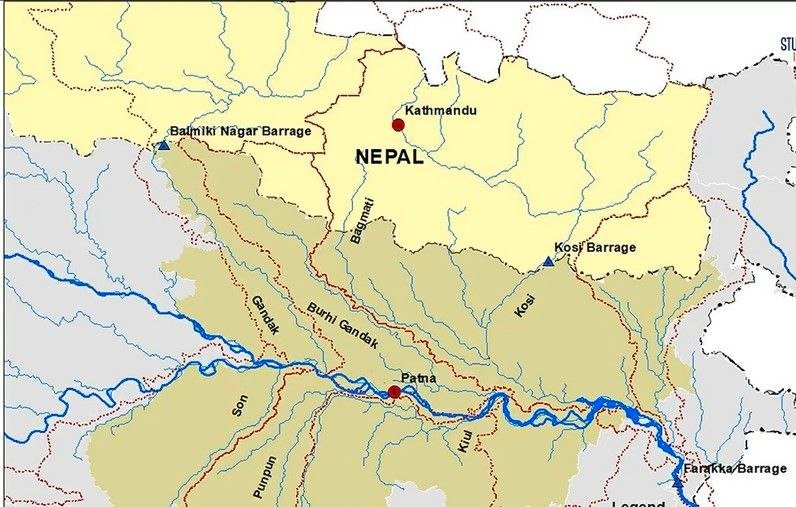
Following the severe flash floods in Nepal, large volumes of water have moved downstream toward Bihar through rivers such as the Trishuli-Gandak/Narayani river system.
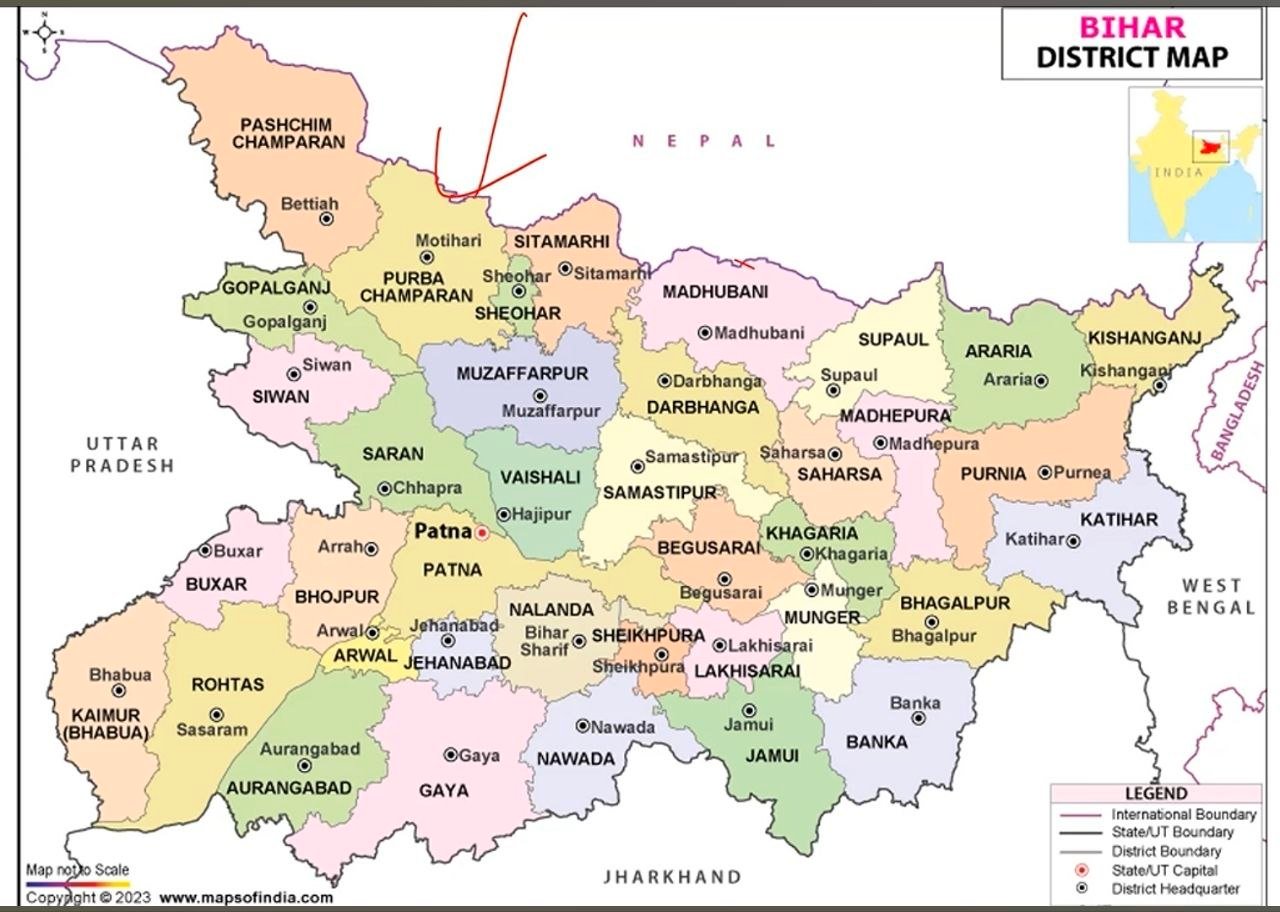
The Bihar government subsequently issued an advisory asking people to avoid buying, selling or consuming unfamiliar/unusual fish caught from floodwaters, particularly fish appearing in areas affected by the incoming Nepal floodwater. Reports specifically mention concern in West Champaran and Gopalganj.
The crucial point is:
The government is not saying that all fish are inherently poisonous.
Rather, fish caught directly from floodwaters are considered potentially unsafe because the flood can drastically change the normal aquatic environment and expose fish to contaminated material.
Why is Bihar affected by floods originating in Nepal?
This is fundamentally a geography and river-basin issue.
Northern Bihar lies immediately south of Nepal’s Himalayan and Siwalik regions. Several rivers originate in or pass through Nepal before entering the Gangetic plains.
Important Nepal-to-Bihar rivers include:
- Gandak (Narayani)
- Kosi
- Bagmati
- Kamla
- Mahananda
- Adhwara group of rivers
The Gandak is particularly relevant to this story.
The river is known as the Narayani in Nepal and becomes the Gandak in India.
Earlier reports had already warned Bihar of the possibility of a sudden rise in Gandak water levels following flooding in Nepal.
What does the fish warning actually mean?
The Bihar government’s advisory is essentially a precautionary food-safety measure.
During normal conditions, fish live within relatively stable aquatic ecosystems.
But during extreme flooding, the boundaries between:
- rivers
- ponds
- lakes
- wetlands
- agricultural fields
- sewage systems
- settlements
can disappear.
Floodwater can connect all of them.
Consequently, fish can be swept from one water body into another and transported considerable distances.
This explains why people may suddenly encounter unfamiliar fish species in places where they are not normally found.
Why can floodwater make fish unsafe?
This is probably the most important scientific aspect of the story.
Floodwater is not simply “clean river water moving faster.”
It can collect material from a huge area.
Floodwater can come into contact with:
- sewage
- human waste
- animal waste
- dead animals
- decomposing vegetation
- agricultural chemicals
- industrial contaminants
- household waste
- pathogens
- polluted drains
The Bihar authorities specifically cited the possibility of fish coming into contact with sewage, dead animals and other contaminated substances, increasing the risk of bacterial, viral and other pathogen contamination.
Why are unfamiliar fish particularly concerning?
There are several reasons.
A. Species identification problem
A person may not know:
- what species the fish is,
- where it originated,
- whether it is normally consumed,
- whether it is poisonous,
- whether it is contaminated,
- whether it is an invasive species.
Therefore, the safest approach during an emergency is:
Unknown fish = don’t consume until identified and cleared.
B. Possible contamination
Even if the fish itself is an otherwise edible species, its exposure to polluted floodwater can create food-safety concerns.
The issue therefore isn’t necessarily:
“This species is poisonous.”
It may instead be:
“We don’t know what this fish has been exposed to.”
That’s an important distinction.
What illnesses are authorities concerned about?
Reports on the Bihar advisory mention symptoms including:
- vomiting
- diarrhoea
- abdominal pain
- dizziness
- breathing difficulty
- after consumption of unusual fish.
These symptoms are not proof of one particular disease or toxin. They are warning signs that can occur with various forms of foodborne illness or toxic exposure.
Therefore, the advisory should be understood as a preventive public-health measure, rather than a declaration that a particular pathogen has been definitively identified.
Why did the government tell people not to BUY or SELL the Fish?
If the government only told people:
“Don’t eat it.”
some people might still:
catch the fish,
sell it in markets,
restaurants might purchase it,
consumers might unknowingly buy it.
Therefore, restricting buying + selling + consumption creates a broader safety barrier.
The objective is to prevent potentially unsafe fish from entering the food chain.
Ecological angle: invasive species
There is another interesting environmental dimension.
Floods can transport aquatic organisms beyond their natural geographic range.
This can potentially introduce:
- non-native fish
- invasive species
- pathogens
- parasites
into new ecosystems.
An introduced fish may compete with native species for:
- food
- breeding grounds
- habitat
or alter the aquatic food web.
Thus, unusual fish arriving with floodwaters can become an ecological issue, not merely a food issue.
Great article! Very informative and easy to understand. Thanks for sharing such useful information.